San Francisco 49ers make tech look easy
A unified data platform from NetApp helps power live production, protect operations, and prepare for AI.

Winning numbers
full-resolution footage in real time
data availability
downtime for mission-critical operations
San Francisco 49ers
One platform, one team, shared success
The best athletes make it look effortless.
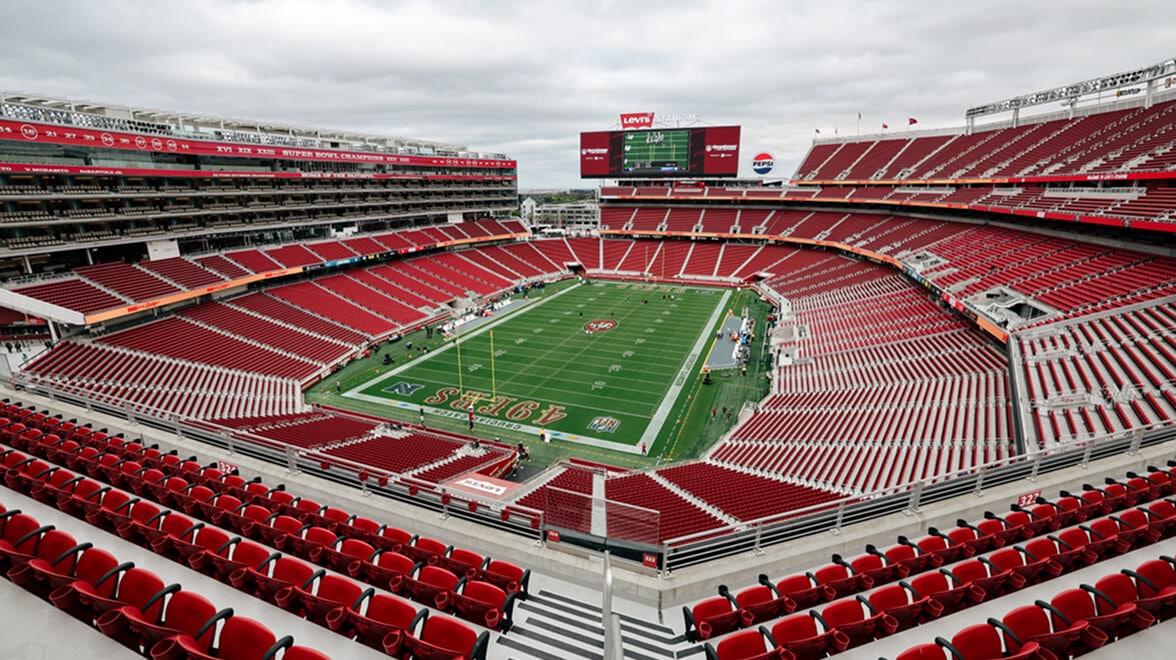
In the same way, the best technology is invisible, which is how the San Francisco 49ers have built a modern sports media and data powerhouse. The 49ers aren’t only running a football team. They are also managing a complex infrastructure that supports live stadium production, football operations, business systems, and 80 years of archived footage — all on a single data platform by NetApp.
Complex to some but made simple by a thoughtful, well-executed game plan.
The focus starts not just on game day but with 80 years of 49ers history. A Top 10 catch today should be compared to any one of Jerry Rice’s iconic feats.
The 49ers have footage going back to Kezar Stadium and Candlestick Park. Decades of it. For years, a lot of that history sat in slow, cold storage, technically saved but practically out of reach.
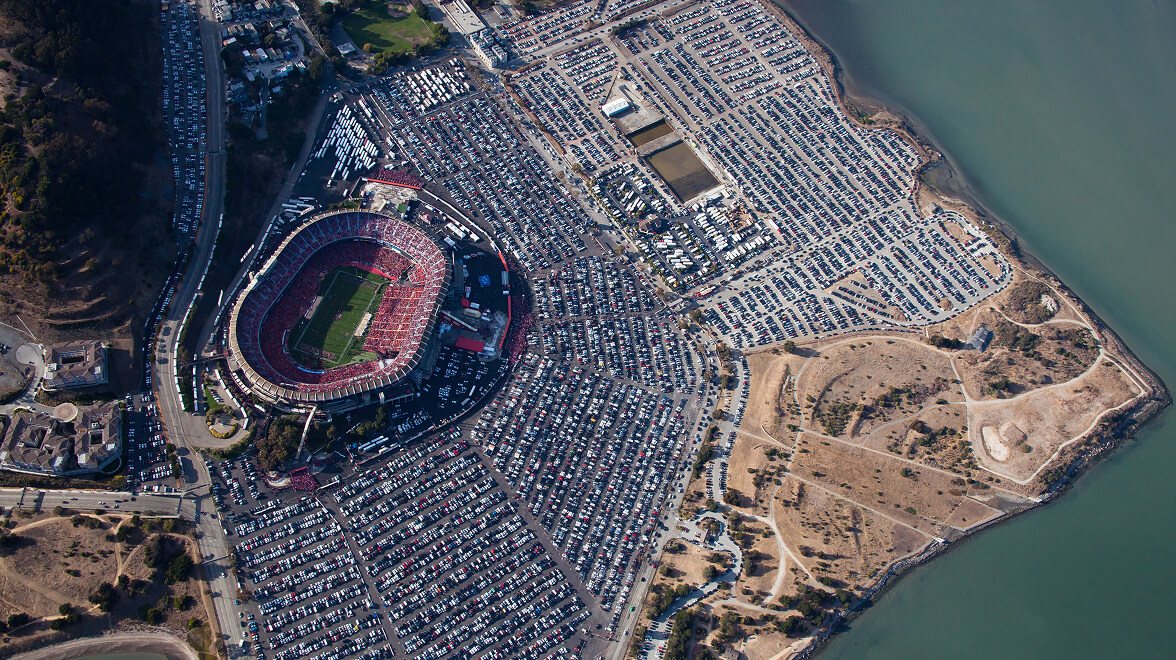
Now it lives on fast local NetApp infrastructure, ready the instant someone needs it.
The 49ers use of NetApp spans the breadth of the organization: live production that requires zero latency and 100% uptime, football operations that require complete reliability and security, an archive that needs to be both preserved and accessible, and a forward-looking AI strategy that depends on data being clean and well-organized.
Those aren’t separate problems. They’re all facets of the same operational reality and addressing them through a single data platform is what makes the most sense.
NetApp ONTAP with SnapMirror Active Sync gives the 49ers a high-availability NAS environment that helps maintain 100% data availability during games and major events. The outcome that matters most: zero downtime. During the Super Bowl. During the playoffs. During the exact moments when a single second of lost access would be catastrophic. The 49ers hit 100% data availability and 0% downtime when the pressure was highest.
“Now we have the capacity to keep up with the amount and quality of content we're capturing.”
Laura Johnson, Executive Producer/Senior Director, Game Presentation & Live Events
How do the San Francisco 49ers use NetApp?
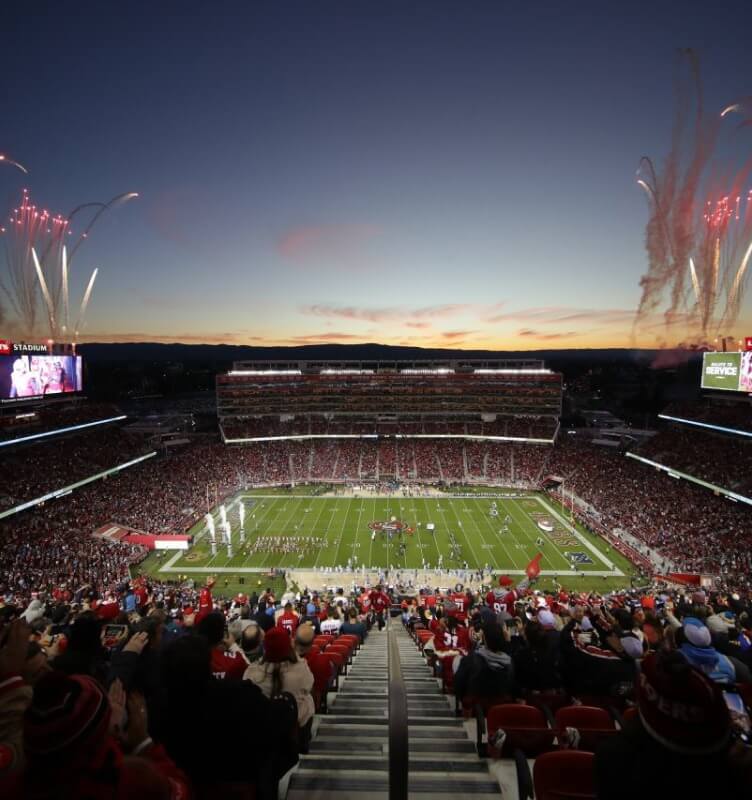
To understand why a consolidated data platform matters, start with the volume. A single game generates roughly 10 separate camera feeds, each running between 600GB and 1TB. That’s multiple terabytes of high-resolution footage per game, on top of everything else the organization produces week over week.
That volume used to be a ceiling. Before the move to NetApp, storage capacity limited what the production team could do. Now, the 49ers run one data foundation across on premises and cloud. Not five systems taped together. One.
“We were really struggling with capacity before,” said Laura Johnson, Executive Producer/Senior Director, Game Presentation & Live Events. “Now we have the capacity to keep up with the amount and quality of content we're capturing.”
Capacity was only part of the reason for running everything on one platform. By keeping stadium production, football operations, and business systems together rather than siloed, the organization manages one data environment instead of separate infrastructure for each team. That single environment is what makes the production standard on the video boards possible.
Some workloads need more room, fast. FlexCache® software extends and optimizes caching so the 49ers can burst those workloads straight into Microsoft Azure.
Why did the 49ers move archival footage to fast local storage?
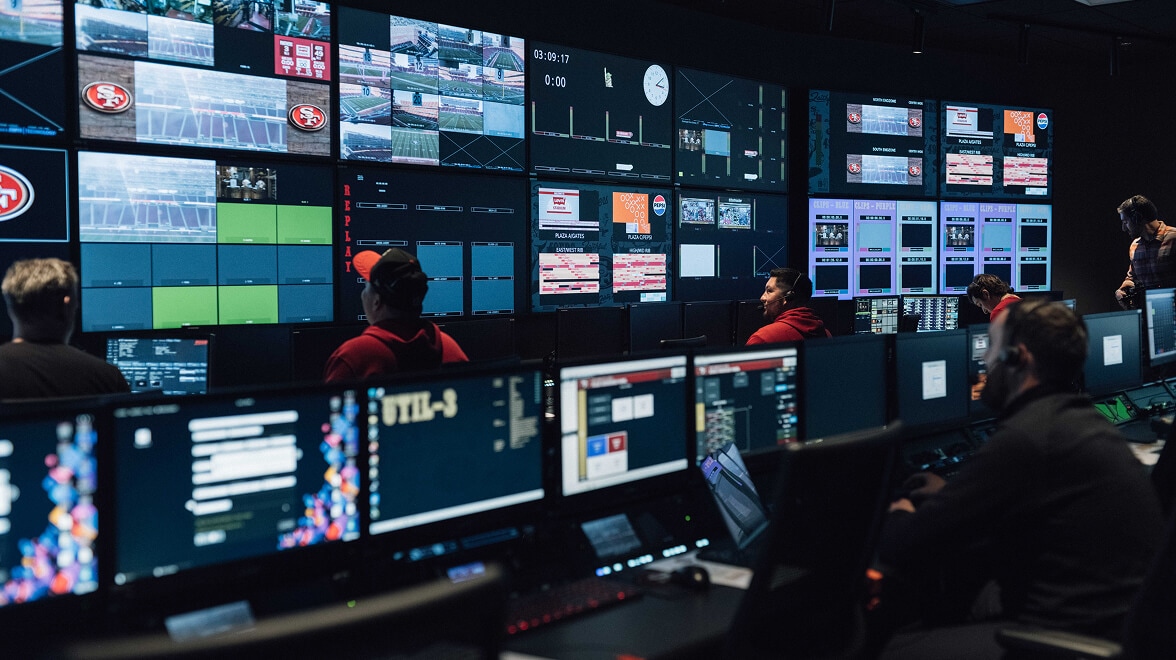
The 49ers call that standard “glass to glass.” From the glass of the camera lens, through the control room, out to the displays, the entire pipeline runs in native 4K with no upscaling at any stage.
Running that workflow at scale puts specific demands on storage, and they show up in how the editors work. They don’t cut with low-resolution proxy files to save time. They pull full 4K footage directly off the network, scrub through it in real time, and produce replays and social content while the game is still in progress. The storage has to keep pace, or the moment is gone.
Speed is one requirement. Uptime is the other, and it’s just as firm. During regular season games, playoffs, or events like the Super Bowl, the production team needs 100% availability. Once a game is underway, there’s no maintenance window to fall back on. The infrastructure either holds or it doesn’t.
“We wanted to pull up the actual file, drop it into Premiere or After Effects, and have that real-time capability, like it would be local,” Johnson said. “We got there, and we're continuing to improve on that.”
How does the 49ers data platform reduce downtime risk?
Reliability protects the data the team creates today. Accessibility determines what it can do with the data it created decades ago, and that turned out to be a separate problem worth solving.
The footage can’t be lost, corrupted, or delayed when someone needs it. Storing it where the team gets instant local access turns history into a working production asset instead of a retrieval request. And once footage is that easy to reach, the next question follows naturally: how do you find the exact clip you're looking for?
NetApp FAS handles data tiering: putting the right data on the right storage at the right cost. Hot data stays fast. Cooler data moves to where it makes economic sense.
How are the 49ers preparing video archives for AI search?
So where are the 49ers heading (besides a chance at the Super Bowl)? They’re in the early stages of building AI-assisted workflows, and the data foundation is what makes those practical.
The first hurdle is organization. Much of the oldest footage carries no metadata. Clips of players from past eras are stored but not tagged in any way that makes them searchable. So the team is exploring automatic classification at the storage layer, using spare system capacity on non-game days to catalog historical footage as it passes through. The aim is to turn unlabeled film into footage you can actually find.
Finding a clip is one goal. Finding it by what happened in the game is the next. A parallel effort involves ingesting the NFL's Game Statistics and Information System (GSIS) feed and aligning its real-time data, including down, distance, score, and play-by-play, with the matching video timestamps. That would let a producer search for specific plays by game situation instead of scrubbing through footage by hand.
NetApp’s role in that architecture is deliberate.
“We don't make the AI, we make the AI better,” said Jeff Baxter, head of technical marketing at NetApp. The data layer is what makes AI workflows practical. Without clean, organized, instantly available data underneath, AI tools don't deliver what organizations expect from them.
The NetApp AI Data Engine (AIDE) handles data classification, governance, automated metadata cataloging, and vector embeddings. In plain terms: It knows what every file is, keeps it in order, and makes it findable.
What business outcomes did the 49ers achieve with NetApp?
All of this technology is impressive, but on a normal game day, playoffs, or a Super Bowl, downtime isn’t an inconvenience. It’s the whole show stopping in front of a stadium and a global audience. Most businesses can live with 99.9% availability. Live stadium operations can’t. The target is simpler and less forgiving: 100% availability, zero downtime.
That requires infrastructure. High-performance data infrastructure, built for the moment when second place is unacceptable.
FAQ
What does NetApp help the 49ers do?
NetApp helps the 49ers run live stadium production, support football operations, manage archival footage, and prepare data for AI-driven workflows on a unified platform.
Why is low-latency storage important for the 49ers?
Low-latency storage lets editors access and edit full-resolution 4K footage in real time during games, when delays can mean missed content opportunities.
How does the 49ers archive support future AI use cases?
By making historical footage accessible and improving metadata, the organization can move toward searchable video libraries, automated classification, and play-based retrieval.
Why does uptime matter so much in this environment?
During live games and major events, any storage or access disruption can interrupt production, delay content, and create operational risk in front of a stadium and broadcast audience.
A winning data advantage
See how NetApp technology helps customers like the 49ers deliver moments that matter
.png?width=5760&format=avif&disable=upscale)